GreyMonk
Turning engineering activity into actionable team and project insights.
I turned code, pull-request, delivery, and AI-generated signals into interactive views engineering leaders could investigate. I owned TypeScript/React frontend work and data models, shaped API contracts with backend engineers, and delivered team and project experiences for a product spanning 100+ engineers and 10+ projects.
View GreyMonk at Shuru (opens in a new tab)
Project evidence
- 100+ engineers
- product data scopeEngineering activity represented by the product's team and project views.
- 10+ projects
- project and delivery context
- 5,000–10,000
- commits and pull requests per monthApproximate combined monthly data volume represented by the product.
- Shared contracts
- frontend/backend product decisions
01 / Making the data useful
Give leaders an insight they can investigate.
I built TypeScript/React views that turned code, pull-request, delivery, team-performance, and AI-generated signals into navigable product context. Leaders could move between metrics, projects, teams, and insights while keeping the evidence behind a number available.
GreyMonk's product data covered 100+ engineers, 10+ projects, and roughly 5,000–10,000 commits and pull requests combined each month. I shaped the frontend models and shared API contracts that made that volume usable in the team and project experience.
02 / Frontend architecture
Make asynchronous data understandable at every stage.
I modeled loading, partial, empty, failure, and resolved REST states explicitly, then translated complex backend data into interactive views. This kept the interface clear about what data had arrived and what remained unresolved.
I built consistent frontend models across metrics, AI-generated insights, team views, project views, and delivery signals. Those models let the experience share context as a leader moved between different views of the same engineering activity.
Published product material
GreyMonk, in product.
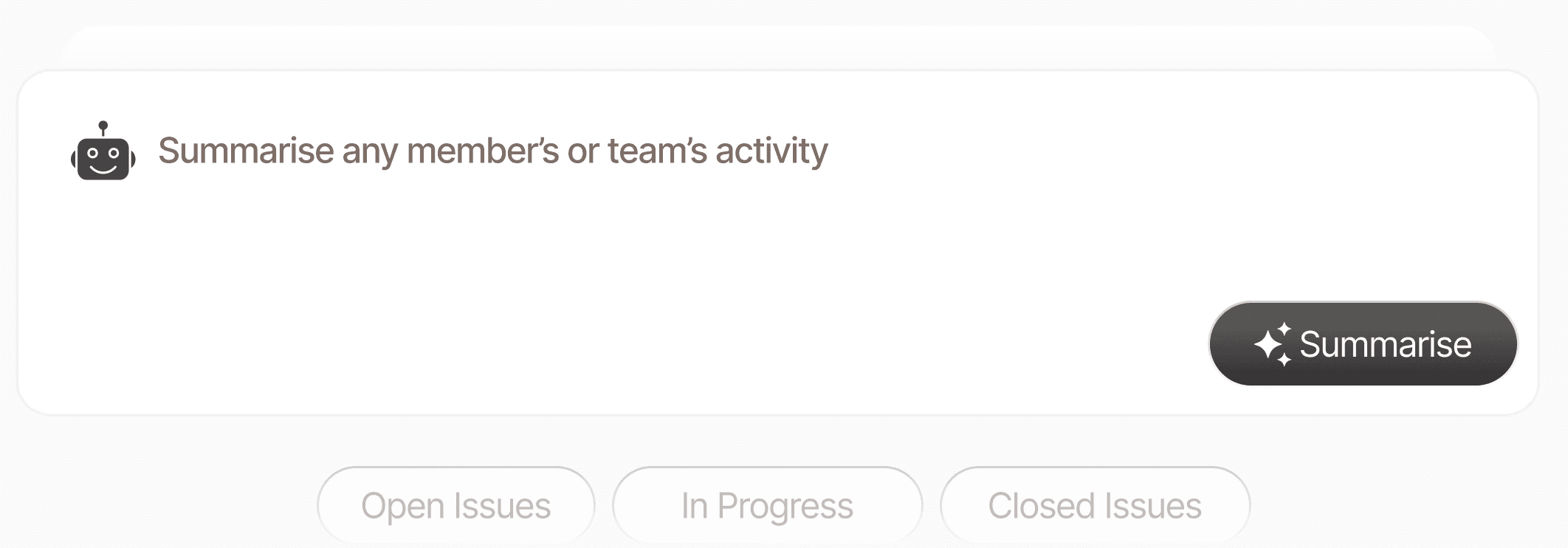
Scroll horizontally to inspect the full product image.
System model
From engineering activity to an inspectable product signal
Source data and AI-derived output move through shared API contracts before becoming contextual team, project, and delivery views.
Converging data and AI branches
- 01Engineering activity
Code · pull requests · delivery data
- 02Backend data models
Shared representation of product signals
- 03AI-derived outputs
Generated engineering insights
- 04REST API contracts
Async states and stable client boundaries
- 05Interactive views
Metrics · teams · projects · delivery
- 06Engineering leaders
Context for investigation and decisions
Connections
- Engineering activityBackend data models
- Backend data modelsAI-derived outputs
- Backend data modelsREST API contracts
- AI-derived outputsREST API contracts
- REST API contractsInteractive views
- Interactive viewsEngineering leaders
03 / Cross-boundary decisions
Shape the product contract with the backend team.
I worked with backend engineers to shape API contracts, data models, and product behavior before those decisions became UI code. We aligned how engineering signals and AI-derived outputs were represented and consumed by the client.
My contribution connected technical data modeling to the questions leaders could investigate: the context behind an AI-generated insight, the source of a delivery metric, and the relationship between team and project views.
Discuss the work
Bring me the next product problem.
I bring product judgment, hands-on leadership, and the engineering depth to take an important problem from the first decision through release. Let’s talk about what you want to build or improve.
The source code is proprietary to Shuru Technologies. I can discuss my responsibilities, frontend architecture, API contracts, technical decisions, trade-offs, and outcomes without disclosing confidential material.